CBD for Sleep: What the Science Really Says
A lot of advice about the potential benefits of CBD on sleep on the internet is unscientific or just wrong. This site walks through the science of clinical trials that have tested the effects of CBD on sleep. Here we will examine the doses actually tested, what worked, what did not, and where CBD may fit if you are trying to improve your sleep in a science-based, safe, and informed way.
A science-driven guide from Defined Sleep and neuroscientist Paul Muchowski, Ph.D., focused on CBD for sleep, insomnia, deep sleep, and REM sleep.
CBD FOR SLEEP - The Basics
Does CBD help you sleep better? See what the research says. First, let's start with the basics.
What is CBD?
Cannabidiol (CBD) is a small plant derived molecule found in cannabis and hemp. It is one of hundreds of chemically related compounds in plants called cannabinoids. In 2018, the FDA approved a drug called Epidiolex™ that contains CBD as the active ingredient for children with severe forms of intractable epilepsy (Lennox-Gastaut Syndrome and Dravet Syndrome). That same year, congress passed the Farm Bill (aka Hemp act), which led to interstate commerce of CBD. Ever since 2018, scientists have been working hard to determine if CBD might have benefits for other medical indications.
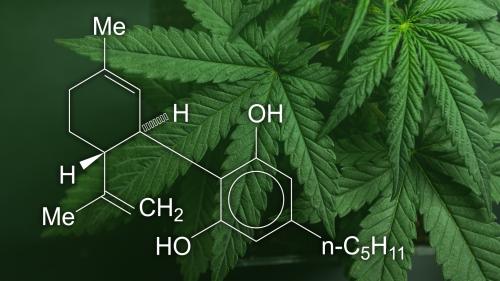
Cannabidiol (CBD) molecular structure
CBD FOR SLEEP - Key Takeaways From CBD & Sleep Clinical Data
Does CBD Help For Sleep?
Since 1981, a number of clinical trials have tested if CBD can influence sleep. Here we report the key takeaways from these studies.
CBD Is Well tolerated
Across numerous randomized, placebo-controlled trials with large numbers of participants, CBD is well tolerated, with minimal adverse effects reported.
CBD Reduces Anxiety and Promotes Calmness
CBD has been shown to decrease anxiety and increase a sense of calmness reported across numerous randomized, placebo controlled trials in large numbers of trial participants.
CBD Improves Subjective Sleep Quality
CBD has been shown to improve subjective sleep quality across numerous randomized, placebo controlled trials in large numbers of trial participants.
Higher Doses Of CBD May Be Required For Maximal Benefits On Sleep
Some studies with lower doses of CBD did not show benefits on sleep. Most studies indicate higher doses (>150 mg) might be required for benefits.
CBD Formulation Matters For Deep And REM Sleep
While CBD alone appears to have benefits on subjective sleep quality, only select formulations of CBD that include terpenes have been shown to increase deep and REM (aka restorative) sleep.
EXPLORE THE CLINICAL RESEARCH
Loading clinical trials...
CBD FOR SLEEP - Frequently Asked Questions
How is CBD different from THC?
∆9-Tetrahydrocannabinol (∆9-THC or THC for short)
Although CBD and THC are very similar in terms of their chemical structure, their effects on human physiology are very different. THC is intoxicating, causes euphoria, increased heart rate and blood pressure, dry mouth, red eyes, and conjunctivitis. THC enhances sensory perception, impairs coordination and motor skills, and can alter your perception of time. For some people, THC can trigger anxiety, paranoia, or hallucinations, especially at high doses. In contrast, CBD does not cause intoxication and is considered non-psychoactive. CBD does not influence heart rate or blood pressure, or cause red eyes or conjunctivitis. CBD does not influence sensory perception, impair coordination and motor skills, or alter your perception of time. CBD does not trigger anxiety, paranoia , or hallucinations. Some published studies have shown CBD may have an anxiety lowering effect.
CBD Extract or Isolate…Which One Can You Trust?
The vast majority of CBD products are sold as hemp oil, which is composed of ill-defined extracts from the hemp plant. Hemp oil naturally contains various cannabinoids, terpenes, and other compounds, including THC, in varying and often unknown amounts. Therefore, the composition and efficacy of hemp oil can vary dramatically from batch to batch. It's also important to note that the majority of hemp oils have never undergone any clinical testing in humans. In contrast, some CBD products are sold as an isolate. What does that mean? That the manufacturers purified the CBD and removed all other molecules from the hemp plant, including the THC.
Which CBD Products Can You Trust?
When making a CBD purchase, please consider the following as important criteria to select a high quality, trustworthy product.
- Product is made in a good manufacturing practice (GMP)-certified facility.
- Product label clearly shows the dosage levels of CBD (and other molecules).
- Product dosage levels were determined by an independent 3rd party ISO/IEC 17025:2005 accredited laboratory.
- Product was shown to be free of pesticides, heavy metals, residual solvents, microorganisms and other contaminants, as determined by an independent 3rd party ISO/IEC 17025:2005 accredited laboratory.